conmoly 鑫聚新材
中文Request a Quote

CONMOLY / ENGINEERING & CONNECTIVITY

Abrasion-Resistant Cable Jackets

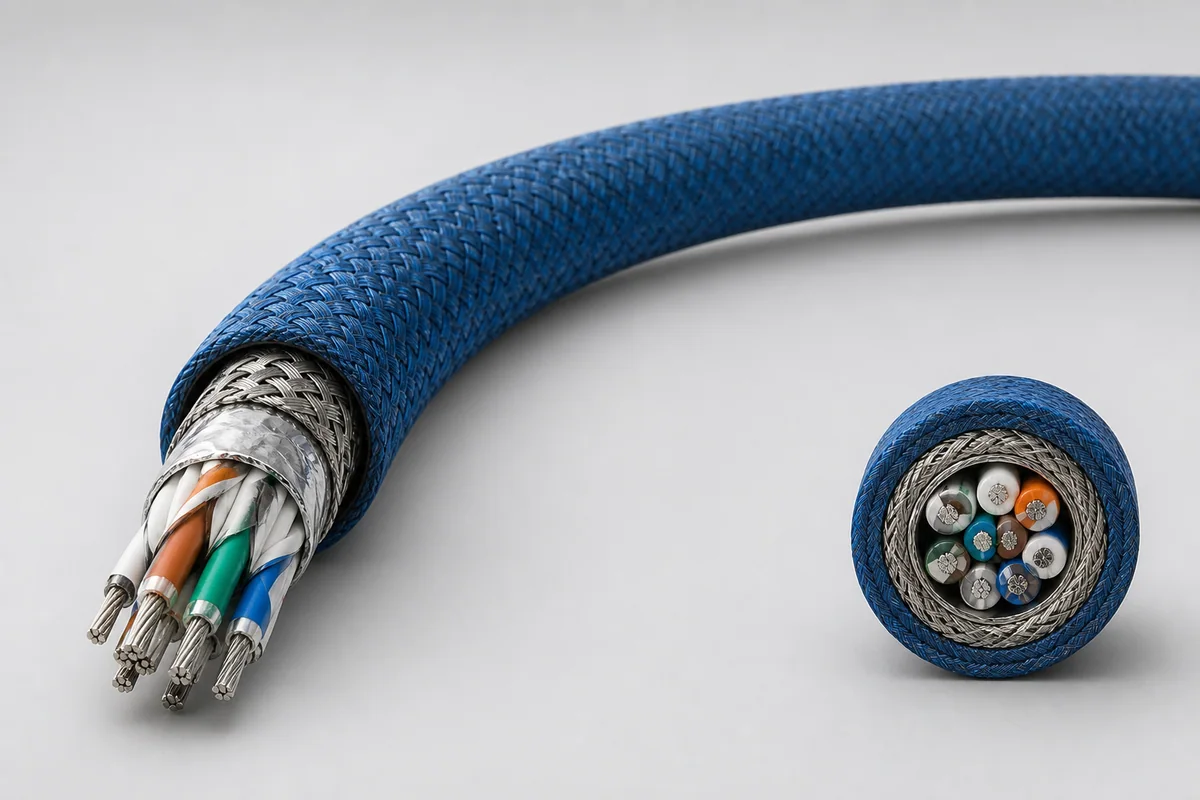
Reference configuration: Thin, lightweight engineered fluoropolymer fiber braid directly protects high-speed copper cables, improving hot cut-through, scrape and repeated-abrasion durability without traditional sleeving.

Abrasion-resistant fluoropolymer cable jacket construction
Product form illustration · Final construction depends on configuration

Secondary Insulation Systems

CM-PROTECT-ARJ

Abrasion Resistant Cable Jackets

Reference configurations only; specifications and certifications require confirmation.

  • Reference · >8,000 scrape cycles
  • Reference · −65 to +200 °C
  • Reference · High-temperature cut-through resistance

Reference specifications

Selection reference. Published third-party figures below describe specific reference configurations; they are not Conmoly guaranteed values or certifications. Confirm the final construction and test requirements with engineering.

Electrical values apply to an HDMI 2.0 cable packaged with this jacket; the jacket's core metrics are high-temperature cut-through and scrape abrasion.

Scroll the table horizontally to view all configuration conditions.

ParameterReference valueConfiguration / condition
Scrape abrasion> 8,000 cyclesEN3475-503; 30/55 °C, 1.2 daN
Cut-through resistance122 / 73 / 59 kgSAE AS4373-703; 23/70/150 °C
Temperature range−65 to +200 °CExample cable configuration
Jacket materialEngineered fluoropolymer fiber braidStandard construction
Data rateUp to 18 Gb/sHDMI 2.0 example using the jacket
Standard impedance100 ± 10 ΩHDMI 2.0 example

Reference source: www.gore.com

Available configurations

High-speed data jacketLightweight wear protection for differential or video cables.
Moving seat harnessFor repeated motion and edge contact in cockpit and cabin seats.
Localized reinforcementCustom length at pinch, pass-through and high-service zones.

Cable construction

Protected cableOriginal diameter, temperature, motion and sensitive surfaces are confirmed.
Isolation bufferReduces imprint, friction and thermal effects from protection materials.
Main protectionExtruded jacket, ePTFE, fiber or metal braid provides the defense.
Closure and branchSleeving, wrapping, tying or custom branching supports installation and service.
End restraintRings, backshells or strain relief control fray and edge wear.

Selection checklist

Harness sizeCable count, diameter range and branch layout
Damage modeAbrasion, scrape, cut, crush or vibration
MotionRelative movement, speed, stroke and bend radius
EnvironmentTemperature, fluids, flame, vacuum and cleanliness
Installation/serviceField fit, removability and connector backshell
Additional functionEMI suppression, grounding, color and marking

Applications

  • Cockpit and cabin seats
  • Defense-vehicle high-speed data
  • Sharp-edge and moving harness zones
  • Lightweight aircraft harness reinforcement

Interfaces & termination

  • Secondary cable or harness covering
  • M85049/88-style backshell direction
  • Custom diameter, branch and end treatment

Project validation checklist

  • Reciprocating abrasion, scrape, cut-through and crush comparison
  • Coverage integrity after flex or vibration
  • End, closure and branch retention
  • Thermal, fluid, flame or vacuum compatibility

Secondary protection changes harness diameter, mass, flexibility and cooling and must be assessed with the original cable and routing envelope.

Cable Protection Systems
CM-PROTECT-CPS

Cable Protection Systems

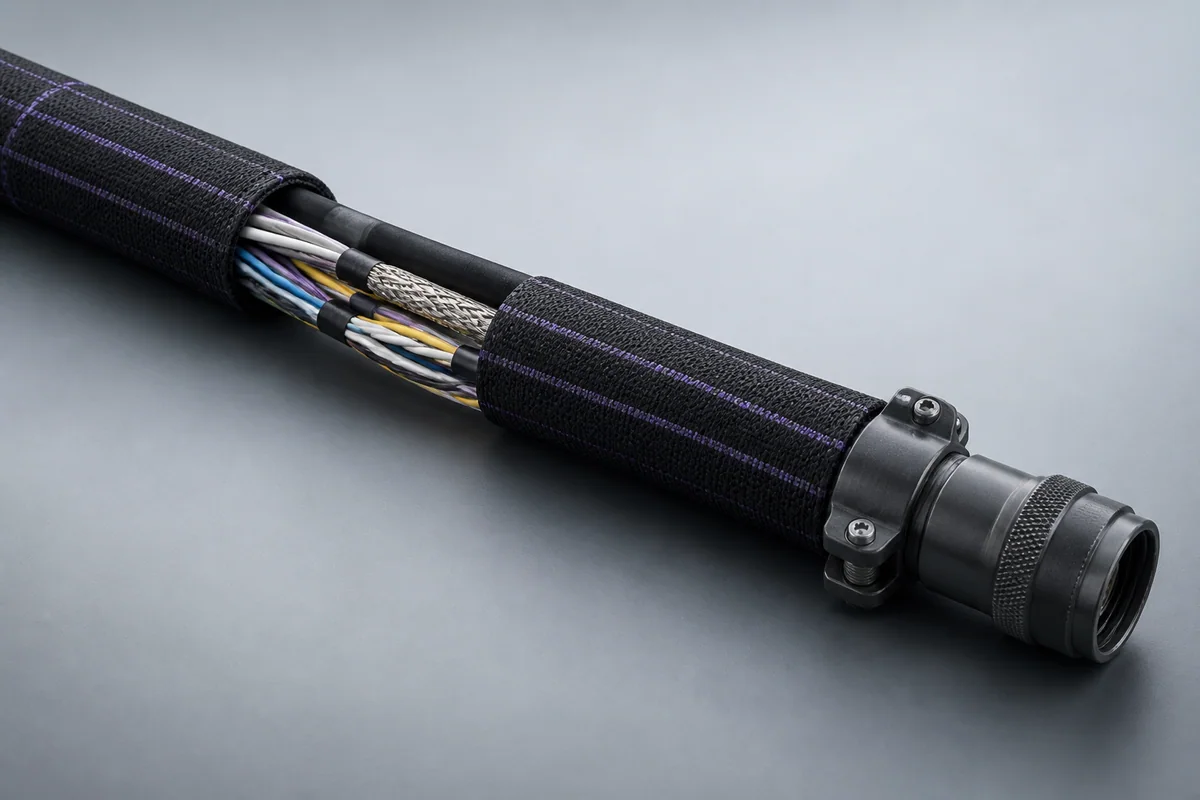
Reference configuration: Crush- and abrasion-resistant, chemically inert ePTFE/PTFE jacket systems package copper and fiber while allowing internal cables to move through complex routes, vibration and harsh fluids.

Reference · −65 to +260 °CReference · Crush and abrasion resistance
View specifications
Cable Protective Braids
CM-PROTECT-BRAID

Cable Protective Braids

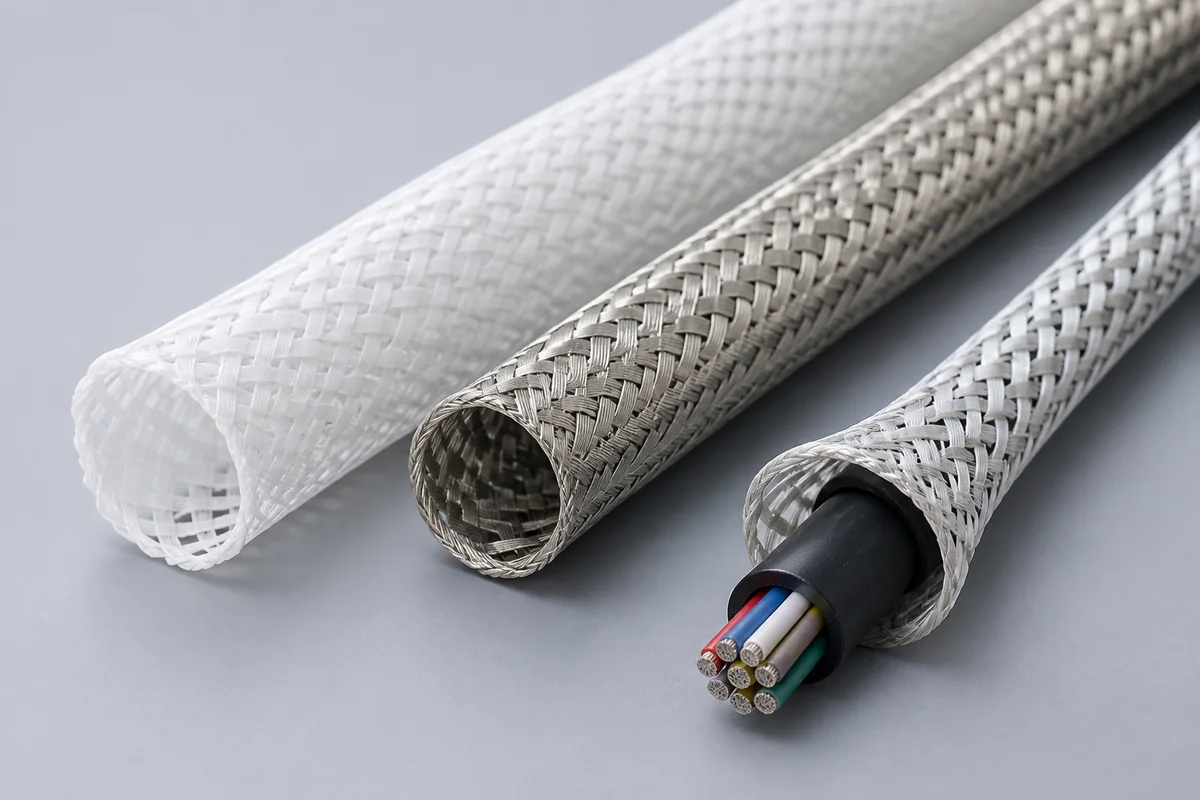
Reference configuration: ePTFE, silver-plated copper, nickel-plated copper or composite braid adds wide-temperature protection and EMI suppression to space harnesses while retaining small diameter and routing flexibility.

Reference · −200 to +260 °CReference · Up to 99% coverage

View specifications