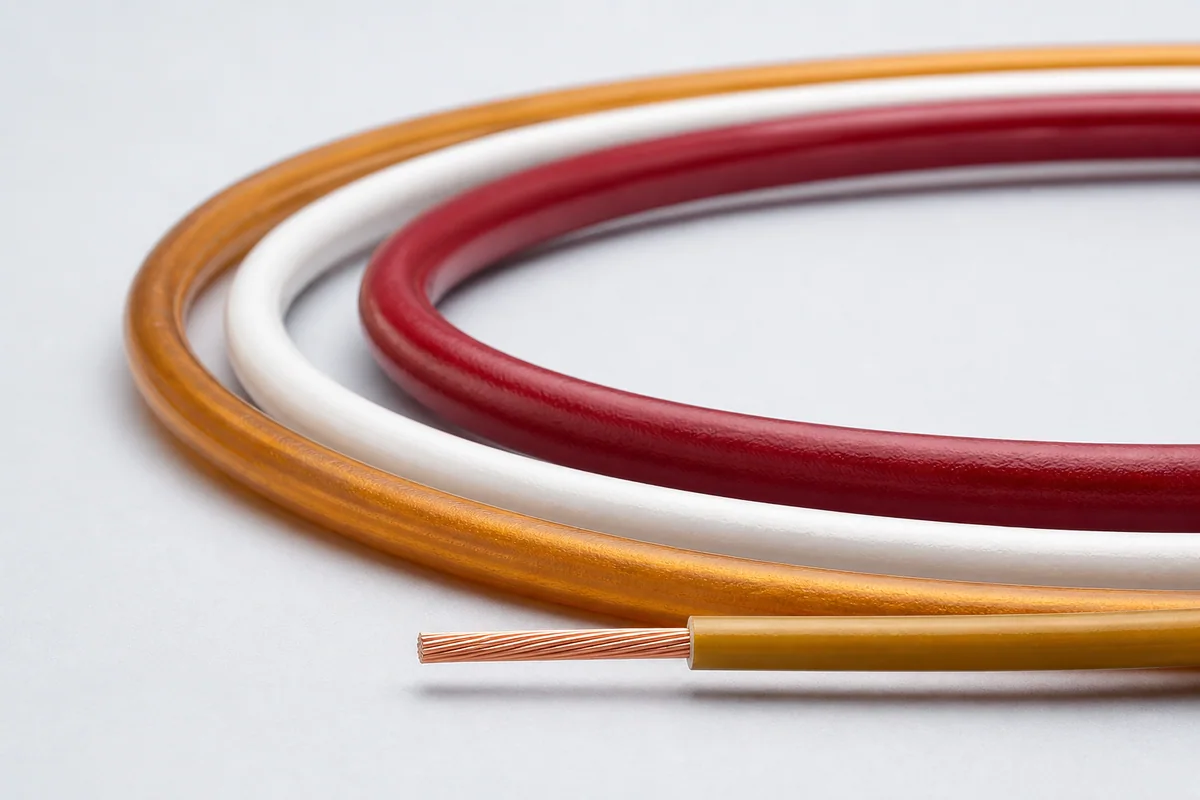
Reference configuration: High-strength thin-wall fluoropolymer insulation provides a 300 °C thermal-class direction and hydrolysis resistance for downhole windings, sensors and high-temperature hook-up wiring.
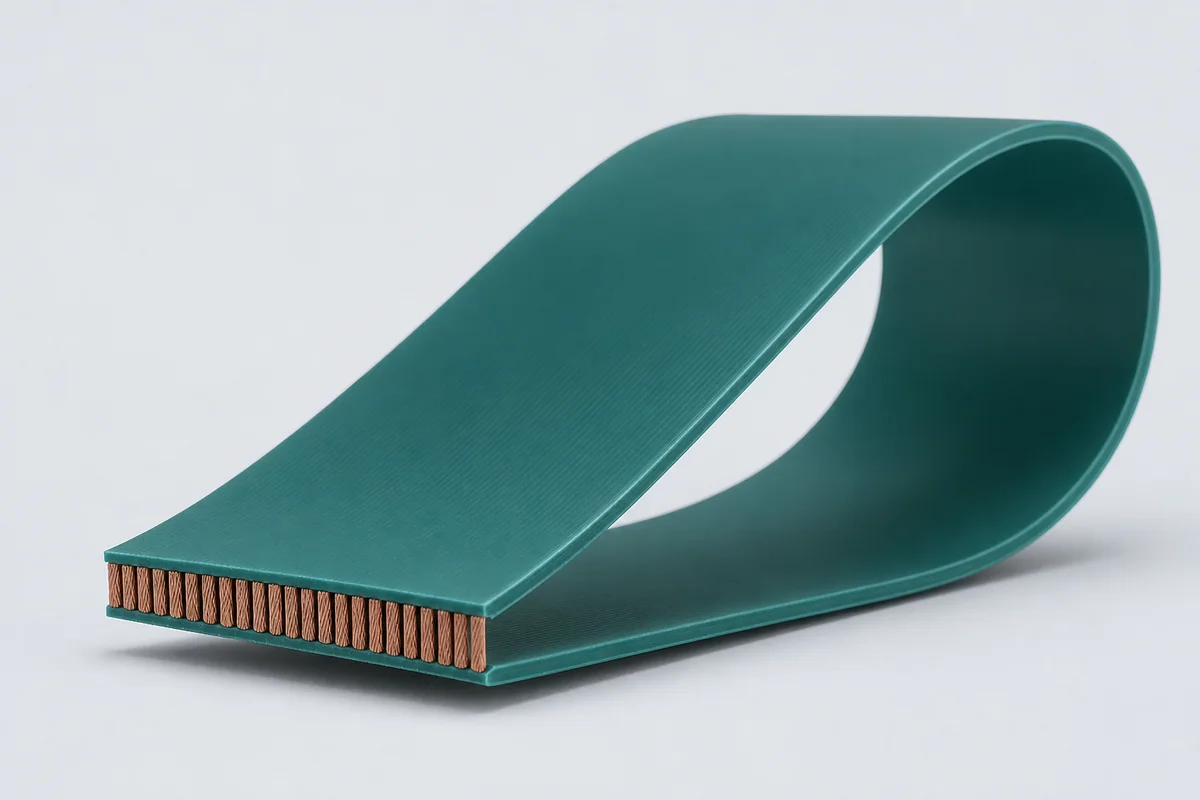
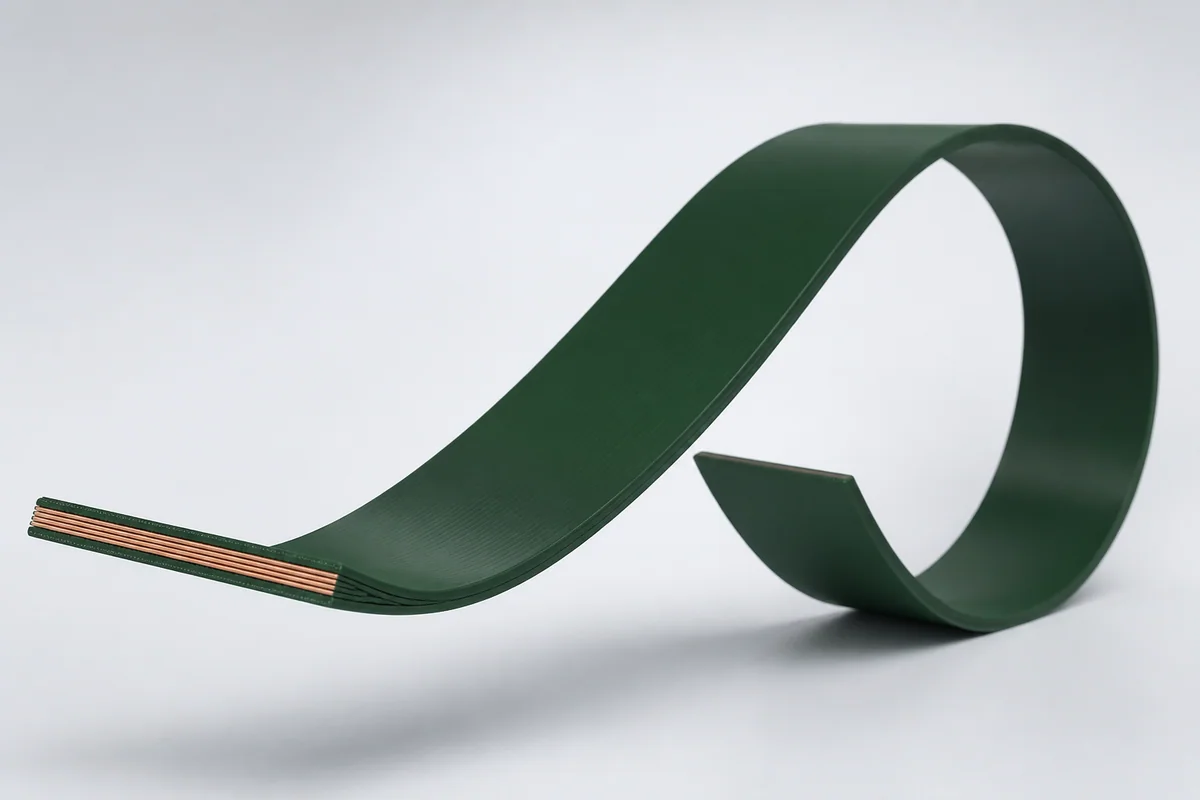
Product form illustration · Final construction depends on configuration
High Flex & Automation Cables
CM-FLEX-WIRE
Insulated Wires
Reference configurations only; specifications and certifications require confirmation.
Selection reference. Published third-party figures below describe specific reference configurations; they are not Conmoly guaranteed values or certifications. Confirm the final construction and test requirements with engineering.
Comparison data use bare copper conductors with thin-wall insulation; tensile strength and dielectric constant are film-material results.
Scroll the table horizontally to view all configuration conditions.
Compact windings under high temperature, voltage and chemical exposure.
Sensor and thermocouple wire
Small-diameter connection for real-time downhole data.
High-temperature hook-up
Preheat cable, tool power and internal control wiring.
Cable construction
Copper conductor
Size and surface are selected for winding, flexibility, resistance and high-temperature duty.
Thin-wall fluoropolymer insulation
Electrical, abrasion, hydrolysis and chemical protection are delivered at small diameter.
Functional wire
Supports windings, sensors, thermocouples, hook-up wiring or high-temperature cable units.
Bundle and shield
Twists, shielding or outer protection are added for signal, power and downhole EMI conditions.
Termination and strain relief
Solder, crimp, winding lead-out and thermal-cycle interfaces are controlled.
Selection checklist
Use
Motor winding, sensor, thermocouple or high-temperature hook-up
Electrical need
Voltage, current, dielectric constant, breakdown and signal integrity
Thermal environment
Continuous temperature, hot spots, cycles and exposure time
Media exposure
Water, steam, acid, oil, methane and hydrogen sulfide
Mechanical boundary
Wire diameter, bend, winding tension, scrape and tensile load
Assembly interface
Coil, terminal, connector, shield and outer cable jacket
Applications
Downhole motors and generators
Solenoids and transformers
Sensors and thermocouples
High-temperature equipment hook-up
Interfaces & termination
Motor, generator and solenoid windings
High-temperature sensors and thermocouples
Downhole cable and equipment hook-up wiring
Project validation checklist
Room- and high-temperature dielectric breakdown
Electrical retention after hydrolysis and chemical exposure
Tensile, windability, scrape and flex tests
Long-duration energized validation in the actual winding or cable assembly
Material test values do not replace finished winding or cable validation; conductor, insulation wall, termination and thermal environment must be assessed together.
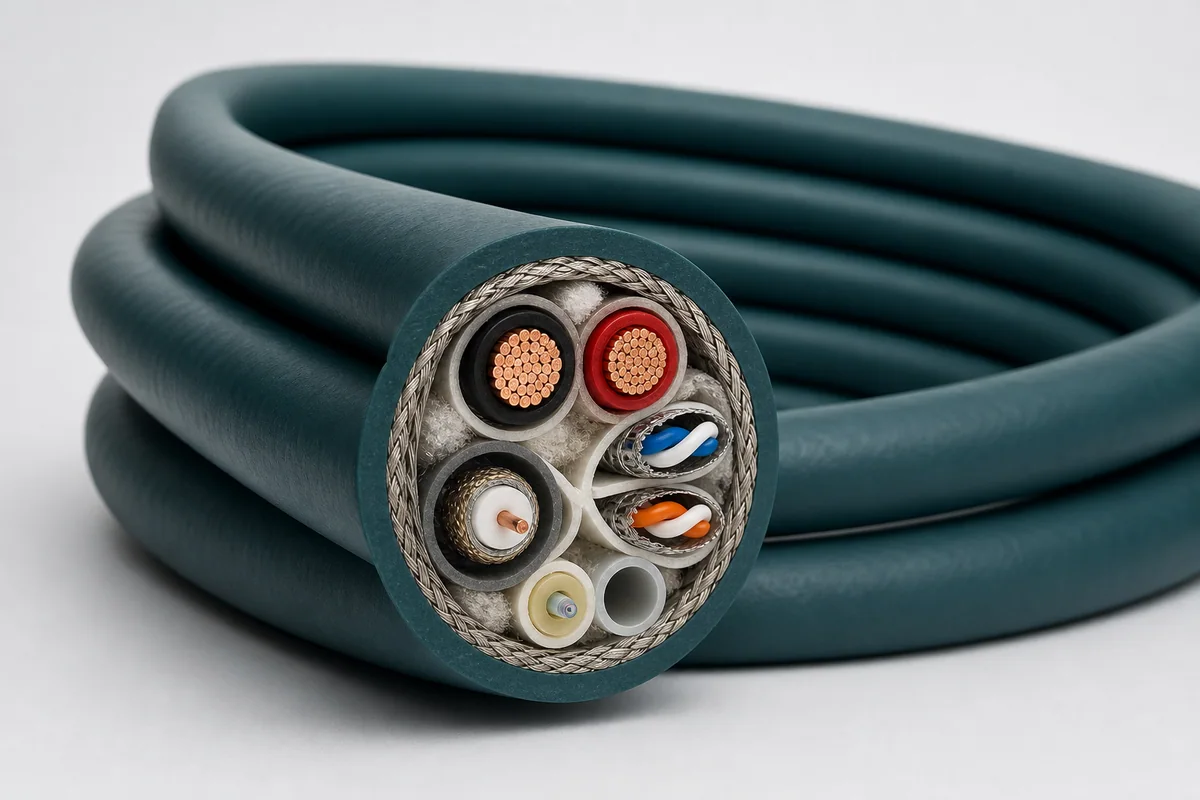
Reference configuration: Signal, power, coax, fiber, pneumatic or fluid units combined inside one round jacket to simplify routing on multi-axis motion platforms and harsh equipment.