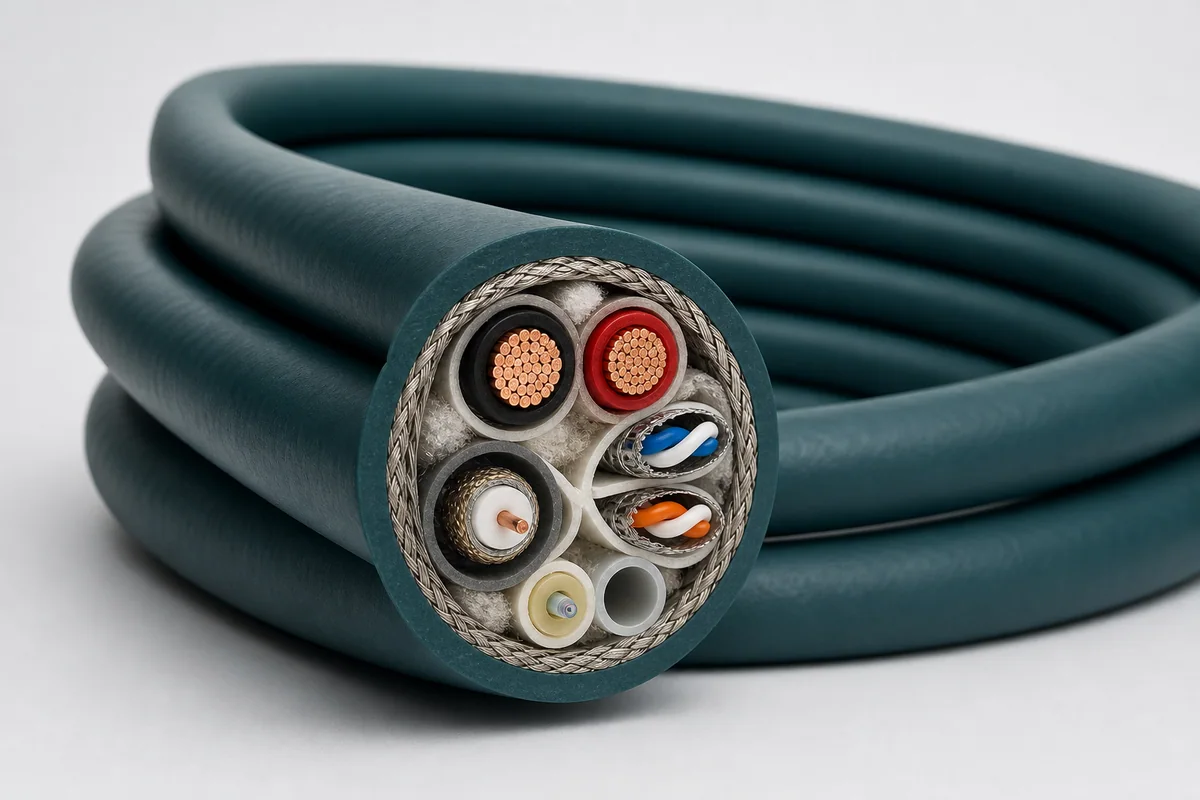
CM-FLEX-HYBRID
Hybrid Round Cables
Reference configuration: Signal, power, coax, fiber, pneumatic or fluid units combined inside one round jacket to simplify routing on multi-axis motion platforms and harsh equipment.
View specifications
CONMOLY / ENGINEERING & CONNECTIVITY
Reference configuration: Parallel low-profile constructions for repeated planar motion, combining compact routing with conductor-position control, low internal stress and equipment-specific termination.
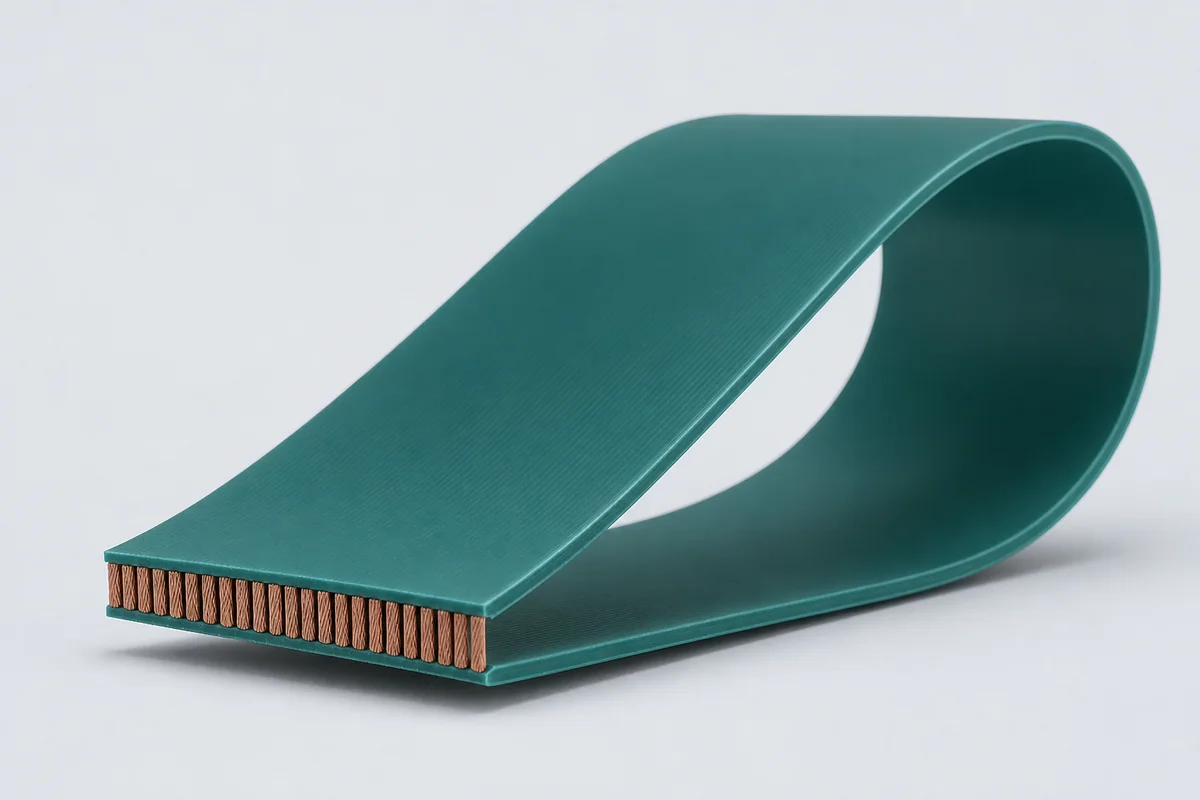
High Flex & Automation Cables
CM-FLEX-FLAT
Flat Cables
Reference configurations only; specifications and certifications require confirmation.
Selection reference. Published third-party figures below describe specific reference configurations; they are not Conmoly guaranteed values or certifications. Confirm the final construction and test requirements with engineering.
Dynamic life is based on a 50 mm bend radius and up to 4 g; IDC and antistatic versions have their own electrical and environmental values.
Scroll the table horizontally to view all configuration conditions.
| Parameter | Reference value | Configuration / condition |
|---|---|---|
| Maximum acceleration / speed | 4.0 g · 4.0 m/s | Dynamic application |
| Maximum self-supporting stroke | 500 mm | Standard and antistatic configurations |
| Maximum width | 300 mm | Custom flat construction |
| Minimum bend radius | 50 mm | Dynamic flexing |
| Dynamic flex life | > 20 million cycles | BR 50 mm, up to 4 g |
| Operating temperature | −40 to +200 °C | Standard version |
| Cleanroom / particulation | ISO Class 1 · < 0.1% | Cleanroom application configuration |
| Surface resistance / charge decay | ≤ 2 × 10⁹ Ω · ≤ 4 ms | Antistatic version |
Reference source: www.gore.com
| Standard clean direction | For clean automated equipment and controlled horizontal or vertical motion. |
|---|---|
| Antistatic direction | For ESD-sensitive handling, inspection and packaging equipment. |
| IDC-compatible direction | Pitch and conductor layout defined around insulation-displacement termination where appropriate. |
| Fine-stranded conductors | Stranding balances electrical resistance and fatigue behavior. |
|---|---|
| Flexible insulation | Low-stress material protects conductors while maintaining pitch. |
| Parallel layout | Places conductors near the neutral plane and controls relative movement. |
| Reinforcement/slip layer | Stabilizes width and manages tension, friction and local stress. |
| Low-friction surface | Supports repeated travel and selected clean-environment direction. |
| Circuit content | Signal, power, grounding and optional optical/pneumatic elements |
|---|---|
| Cable geometry | Width, thickness, pitch and conductor count |
| Motion profile | Stroke, speed, acceleration, radius and cycles |
| Orientation | Horizontal, vertical and guided/free-span routing |
| Environment | Cleanliness, ESD, temperature, humidity and vacuum |
| Termination | IDC, solder, crimp or custom connector assembly |
Flex life and clean performance are functions of radius, stroke, acceleration, load, installation and material configuration and must be validated on the target equipment.
Reference configuration: Signal, power, coax, fiber, pneumatic or fluid units combined inside one round jacket to simplify routing on multi-axis motion platforms and harsh equipment.
View specifications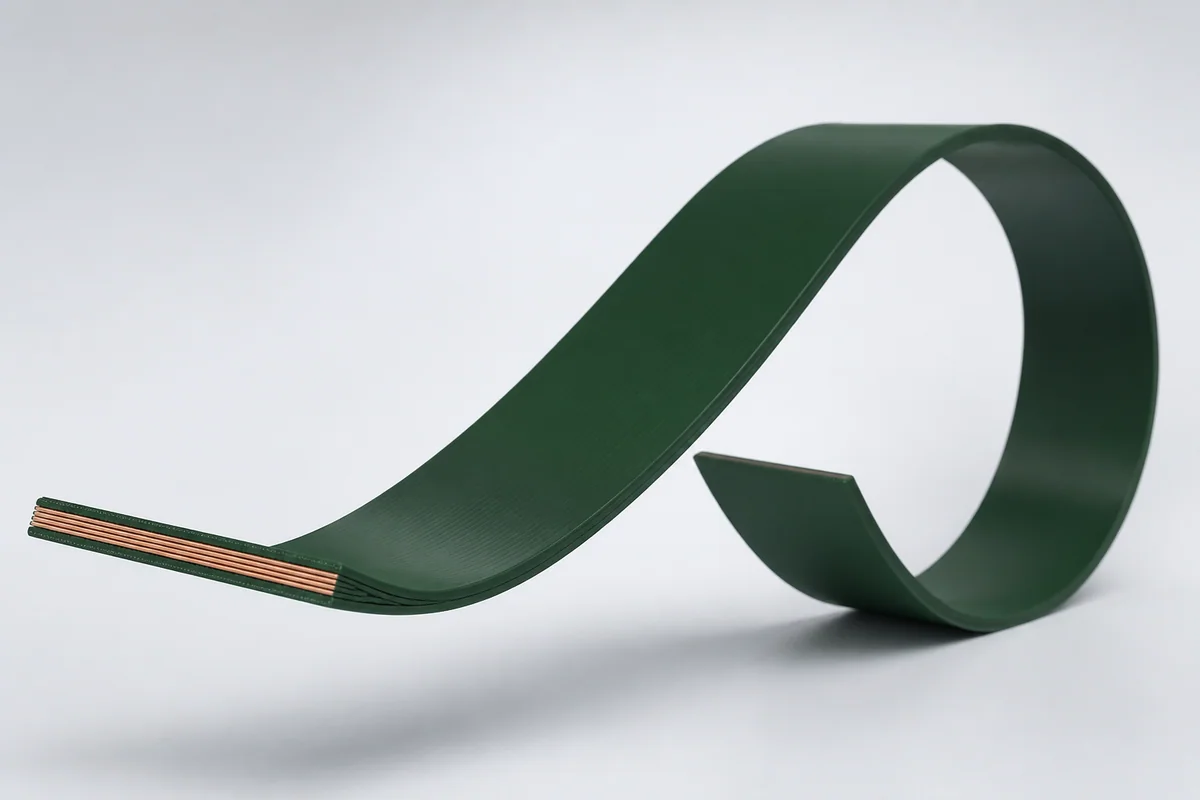
Reference configuration: Lightweight flat self-supporting cable direction for replacing conventional cable carriers in clean motion platforms, reducing vibration, particles, occupied volume and maintenance complexity.
View specifications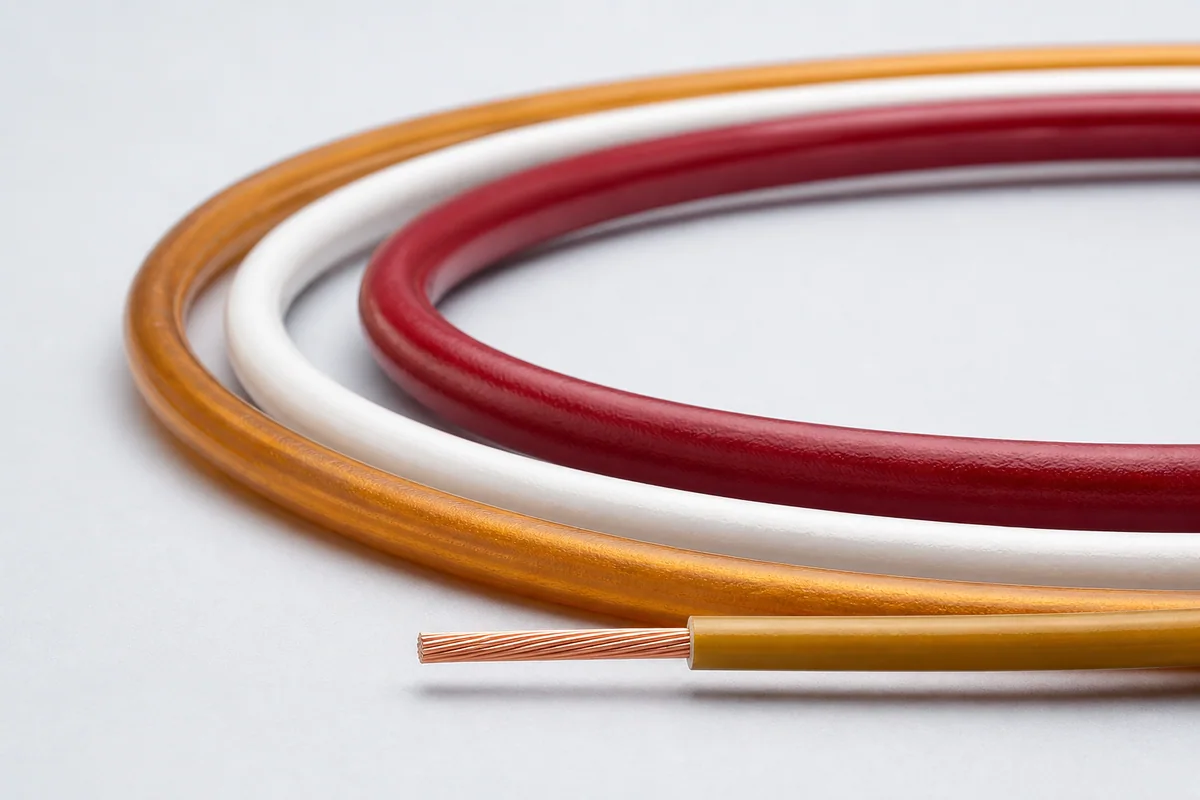
Reference configuration: High-strength thin-wall fluoropolymer insulation provides a 300 °C thermal-class direction and hydrolysis resistance for downhole windings, sensors and high-temperature hook-up wiring.
View specifications